
Flare gas reciprocating compressor valve upgrade: a RONDER case study
After a refinery expansion, the valves in its flare gas compressors ran for shorter periods between maintenance, with heavy coke deposits on the valve plates, seats and spring seats. The refinery trialed RONDER fouling-resistant compressor valves with PEEK plates, 17-7PH springs and 3Cr13 seats. In 2009, the new valves on two compressors accumulated 5,520 and 2,136 operating hours. Both sets were still in service at their respective reporting cutoffs.[1]
Shorter valve operating periods after the refinery expansion
The refinery used L5.5/8/40 reciprocating compressors to recover flare gas. Table 1 lists the compressor operating data.
Table 1. Compressor operating data
| Power/kW | First-stage discharge pressure/MPa | First-stage discharge temperature/°C | Second-stage discharge pressure/MPa | Second-stage discharge temperature/°C | Standard volume flow/(m³/min) |
|---|---|---|---|---|---|
| 230 | 0.18–0.23 | 60–110 | 0.5–0.75 | 90–130 | 40 |
The refinery expansion was substantially complete in 2006. Hydroprocessing, distillation and coking units entered service, and some of their off-gas was routed through the existing flare header to the gas holder and compressors. Gas analyses from corresponding periods in 2008 and 2005 showed increases in hydrogen and C₅ hydrocarbons.[1]
Table 2. Hydrogen, C₅ hydrocarbons and hydrogen sulfide in the recovered gas
| Sample date | H₂/% | C₅/% | H₂S/% |
|---|---|---|---|
| 2008-04-16 | 47 | 9.7 | 1.7 |
| 2008-03-12 | 48 | 8.3 | 2.3 |
| 2008-02-20 | 41 | 8.8 | 1.5 |
| 2005-04-27 | 25 | 7.5 | 2.8 |
| 2005-03-23 | 29 | 1.2 | 3.5 |
| 2005-02-23 | 27 | 1.5 | 1.4 |
Concentrations are presented as volume percentages.
The 2008 maintenance records show repeated first- or second-stage valve failures on both compressors. Individual operating periods ranged from 145 to 664 hours.[1]
Table 3. Operating and maintenance records for the original valves
| Compressor | Start date | End date | Operating hours/h | Maintenance record |
|---|---|---|---|---|
| No. 5 | 2005-05-08 | 2005-11-16 | 2233 | Compressor overhaul and valve replacement, 16 November |
| No. 8 | 2005-06-08 | 2005-10-27 | 2217 | Compressor overhaul and valve replacement, 27 October |
| No. 5 | 2008-08-15 | 2008-09-17 | 664 | First-stage valve failure; maintenance, 17 September |
| No. 5 | 2008-09-17 | 2008-09-25 | 164 | Second-stage valve failure; maintenance, 25 September |
| No. 5 | 2008-09-25 | 2008-10-10 | 145 | First-stage valve failure; maintenance, 10 October |
| No. 8 | 2008-06-01 | 2008-06-19 | 363 | First- and second-stage valve failures; maintenance, 19 June |
| No. 8 | 2008-06-19 | 2008-08-13 | 490 | Second-stage valve failure; maintenance, 13 August |
| No. 8 | 2008-08-13 | 2008-09-19 | 580 | First- and second-stage valve failures; maintenance, 19 September |
Phase changes and coke deposits
Analysis showed that as C₅ content increased, gas–liquid phase change occurred during compression and expansion, and the liquid struck the valve plates and seats. Inspection also found heavy coke deposits on the plates, seats and spring seats.[1]
Deposits collected from the valves felt powdery to the touch. Laboratory analysis identified sulfur (S), chlorine (Cl) and iron (Fe) as the main inorganic elements in the deposits. The main causes of the shorter valve operating periods were therefore changes in gas composition and entrained contaminants.[1]
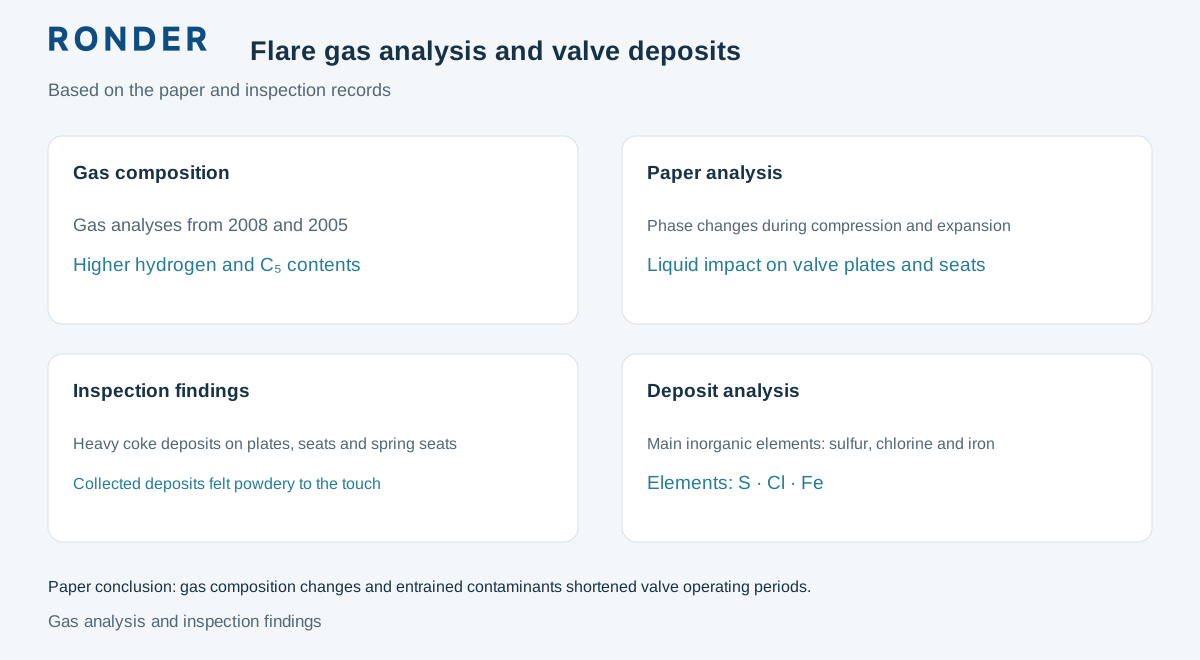
Figure 1. Gas analysis and valve inspection findings.
Material changes for fouling-resistant valves
Following the gas analysis and discussions with several suppliers, the refinery selected RONDER fouling-resistant compressor valves for a trial, with changes to the plate, spring and seat materials.[1]
PEEK valve plates
The new valves used PEEK (polyetheretherketone) plates for the gas containing H₂S and other corrosive constituents, with a relatively high C₅ content.[1]
Spring material
Table 4 gives the chemical analysis of the original valve springs.[1]
Table 4. Chemical composition of the original valve springs
| C | Si | Mn | P | S | Cr | Ni | Mo |
|---|---|---|---|---|---|---|---|
| 0.053 | 0.41 | 16.46 | 0.025 | 0.003 | 12.08 | 0.89 | 0.04 |
Values are mass percentages (w, %).
Chemical analysis showed that the original springs were a high-manganese, low-nickel stainless steel. Considering the corrosive medium and the spring’s ductility and toughness, RONDER changed to 17-7PH precipitation-hardening stainless steel springs.[1]
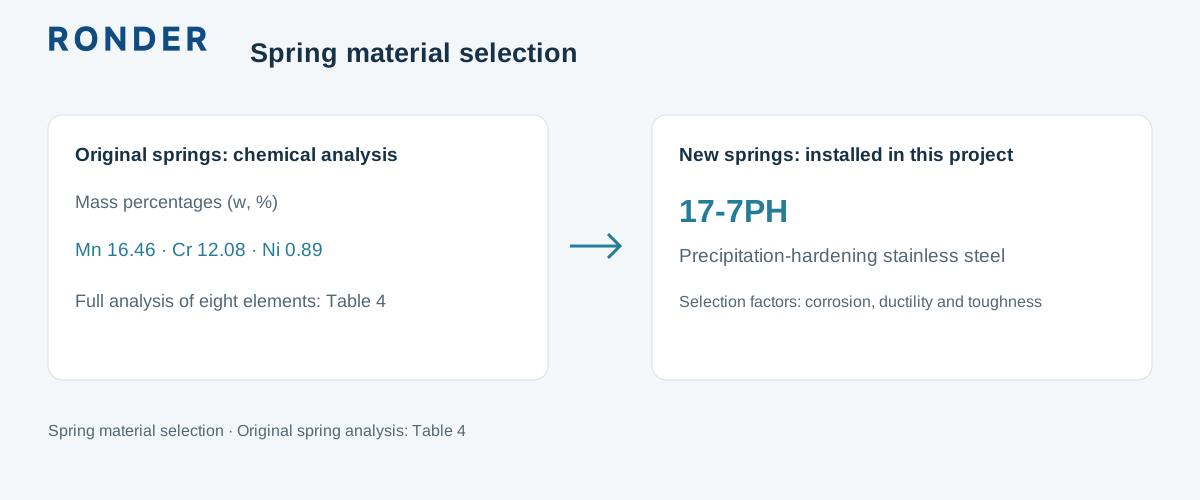
Figure 2. Spring material selection.
3Cr13 valve seats
Corrosive gas constituents, entrained solids and dust also affected the valve seats. The new valves used 3Cr13 stainless steel seats, and an anti-fouling coating was applied to the valve-seat surface to reduce contaminant buildup and corrosion.[1]
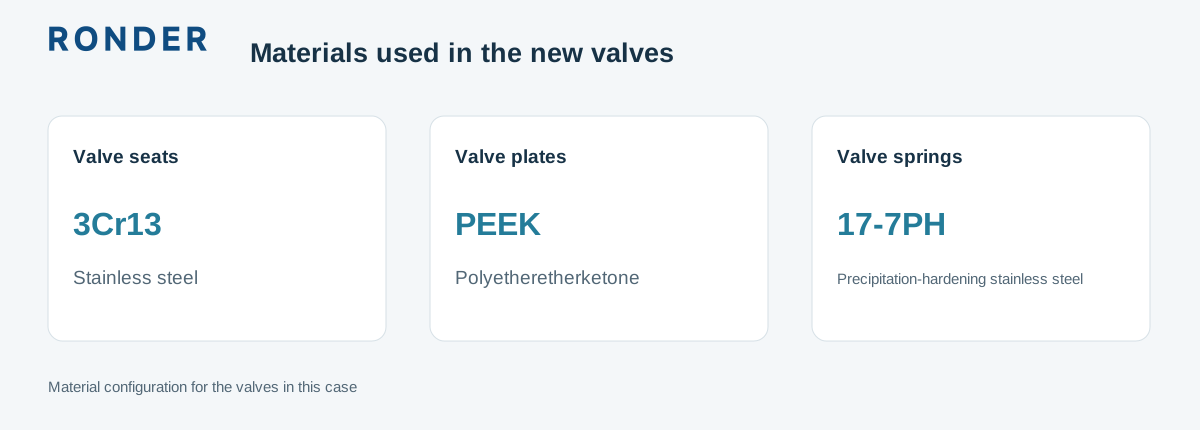
Figure 3. Materials used in the new valves.
Field operating records
In 2009, the new valves on compressor No. 5 accumulated 5,520 operating hours; those on No. 8 accumulated 2,136 hours. Both sets were still in service at their respective reporting cutoffs.[1]
Table 5. Operating records for the new valves
| Compressor | Record start date | Reporting cutoff | Operating hours/h | Status at cutoff |
|---|---|---|---|---|
| No. 5 | 2009-01-09 | 2009-08-28 | 5520 | Still in service |
| No. 8 | 2009-06-26 | 2009-09-23 | 2136 | Still in service |
The original valves in compressors No. 5 and No. 8 averaged 324.3 and 477.7 operating hours over their most recent three records. By the reporting cutoff, the new valves had run 5,520 and 2,136 hours respectively and were still operating—about 17 and 4.5 times the original-valve averages.
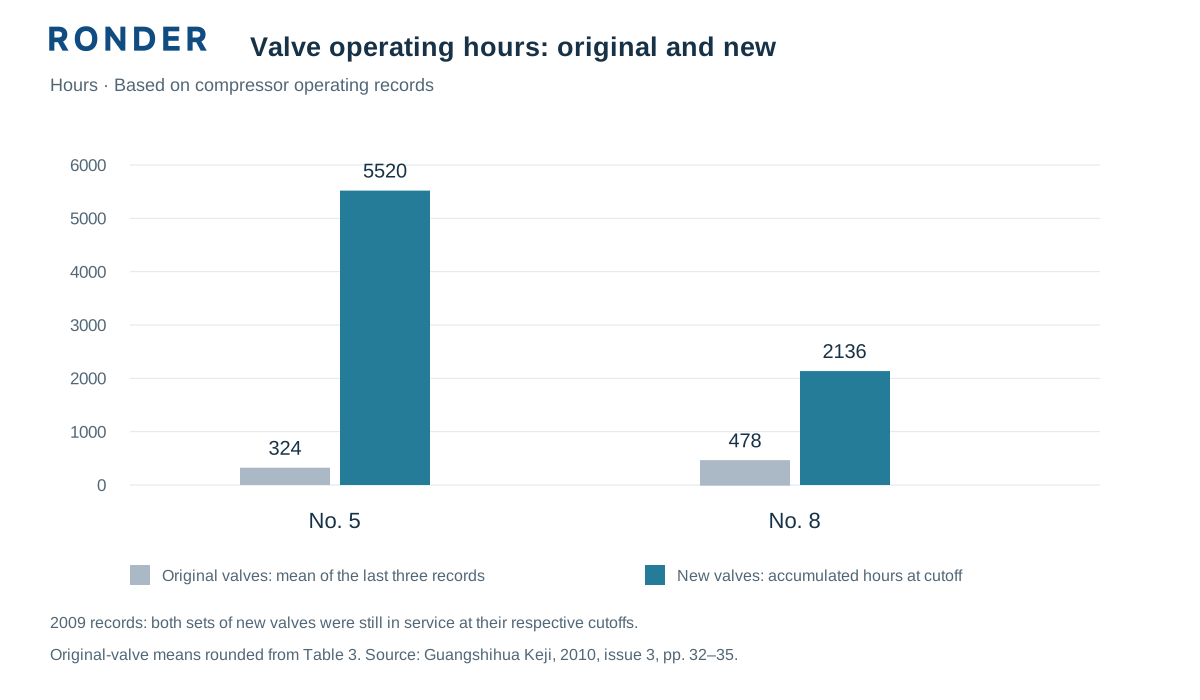
Figure 4. Original-valve averages and new-valve operating records.
Discuss a flare gas compressor valve upgrade with RONDER
If your flare gas compressor has short valve operating periods, coke deposits or recurring valve damage, send the compressor model and a brief description of the problem to sales@ronder-valve.com, together with:
- The compressor stage, suction and discharge pressures and temperatures, operating speed and load range;
- Gas composition, particularly heavier hydrocarbons, corrosive constituents and entrained contaminants;
- Valve operating and maintenance records, photographs of damaged components and installation information you can share.
Reference
- 火炬气往复压缩机气阀改进 [Modification of valves in flare gas reciprocating compressors]. 广石化科技 [Guangshihua Keji], 2010, issue 3, pp. 32–35. In Chinese.
Related product
View reciprocating compressor valve products
Related technical cases
- WP Valves for Chloromethane: 16,000-Hour Average Life | RONDER
- Compressor Valve Replacement: Monthly to Annual Maintenance | RONDER
View all technical resources and cases